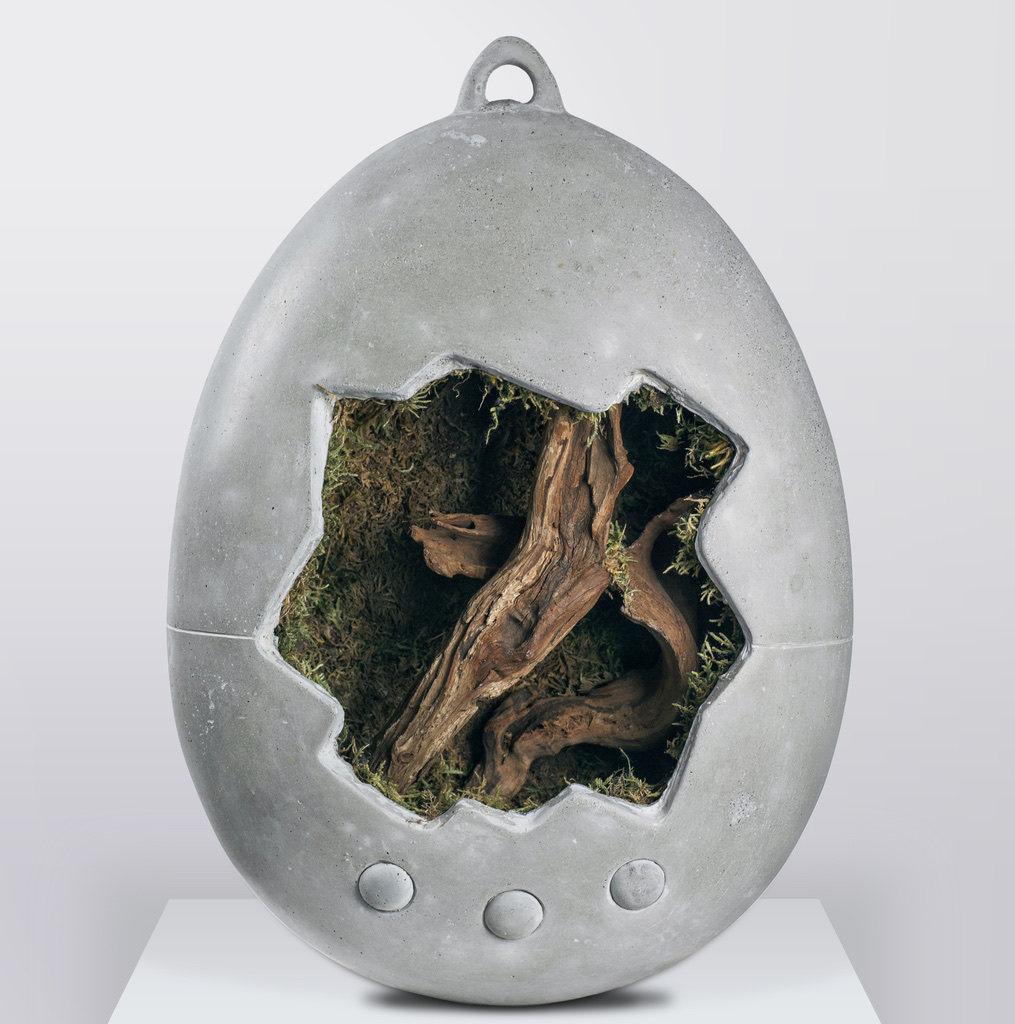
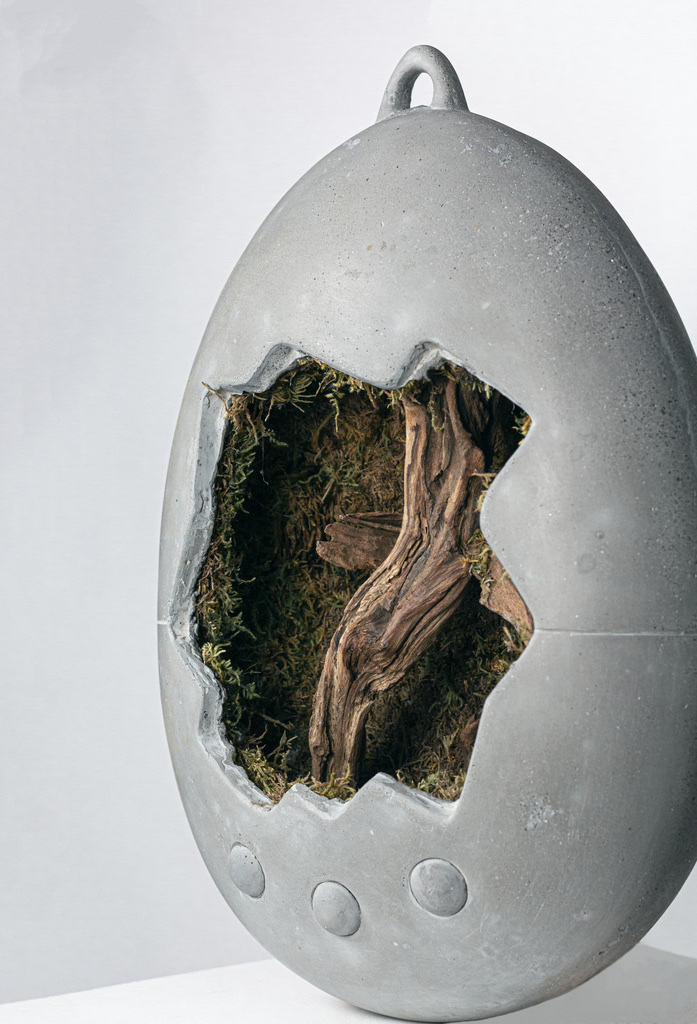
Cast in grey concrete, the egg-shaped object carries the unmistakable features of a handheld digital pet: the loop for a keyring at the top, the faint seam of its casing, three round buttons below. Where the small screen should be, the shell breaks open in a jagged tear, and inside there is no pixel creature but a damp bed of moss and a twisting piece of weathered wood. The contrast of surfaces is carefully staged, the smooth, mineral skin set against fibrous, living texture. At 50 cm high the toy is enlarged to the size of a relic or a reliquary, and the broken edge echoes the familiar motif of a hatching egg. The result reads as a cabinet of nature lodged inside a monument to consumer electronics.
A whole generation learned care through a plastic egg that beeped when its creature was hungry. The object reproduced here belongs to that history of virtual nurture, sold by the million and carried on school bags. By filling the device with moss and wood, the work reverses the relation between the simulation and what it imitated: the real organism takes over the space reserved for its digital surrogate. The title, with its idiosyncratic spelling, points to a scenario discussed in ecology and popular science alike, the planet carrying on once humans are gone. Read this way, the toy becomes a small archaeological find from a vanished culture that preferred to raise pets on screens, while forests quietly reclaimed its concrete.
Opening the egg means looking for a creature, and the first feeling is a small disappointment: nobody is there to feed or to save. That absence matters. Digital pets trained users in a particular kind of attachment, one based on alerts, guilt and reward, and the hollow in the concrete suggests what remains when the need to be needed is removed. The moss and wood ask for nothing. They grow without us, as the title says, indifferent to attention. For the viewer this can bring relief as much as melancholy, the recognition that much of what we call care is also a way of feeling indispensable, and that the living world was never waiting for our notifications.
Remember the egg-shaped toy that died if you forgot to press its buttons? Whitout Us brings it back as a concrete fossil. Blown up to the size of a small boulder, the gadget has cracked open, and instead of a blinking screen there is a miniature forest floor: moss, a gnarled root, the damp of a wood you can almost smell. The piece arrives at a moment when screen time for children, rewilding projects and climate anxiety share the same news pages, and it ties them together with disarming economy. Nature here is neither a victim nor a backdrop; it is the thing that hatches. The misspelt title, more than a slip, works like a scrawled note left in an empty house.