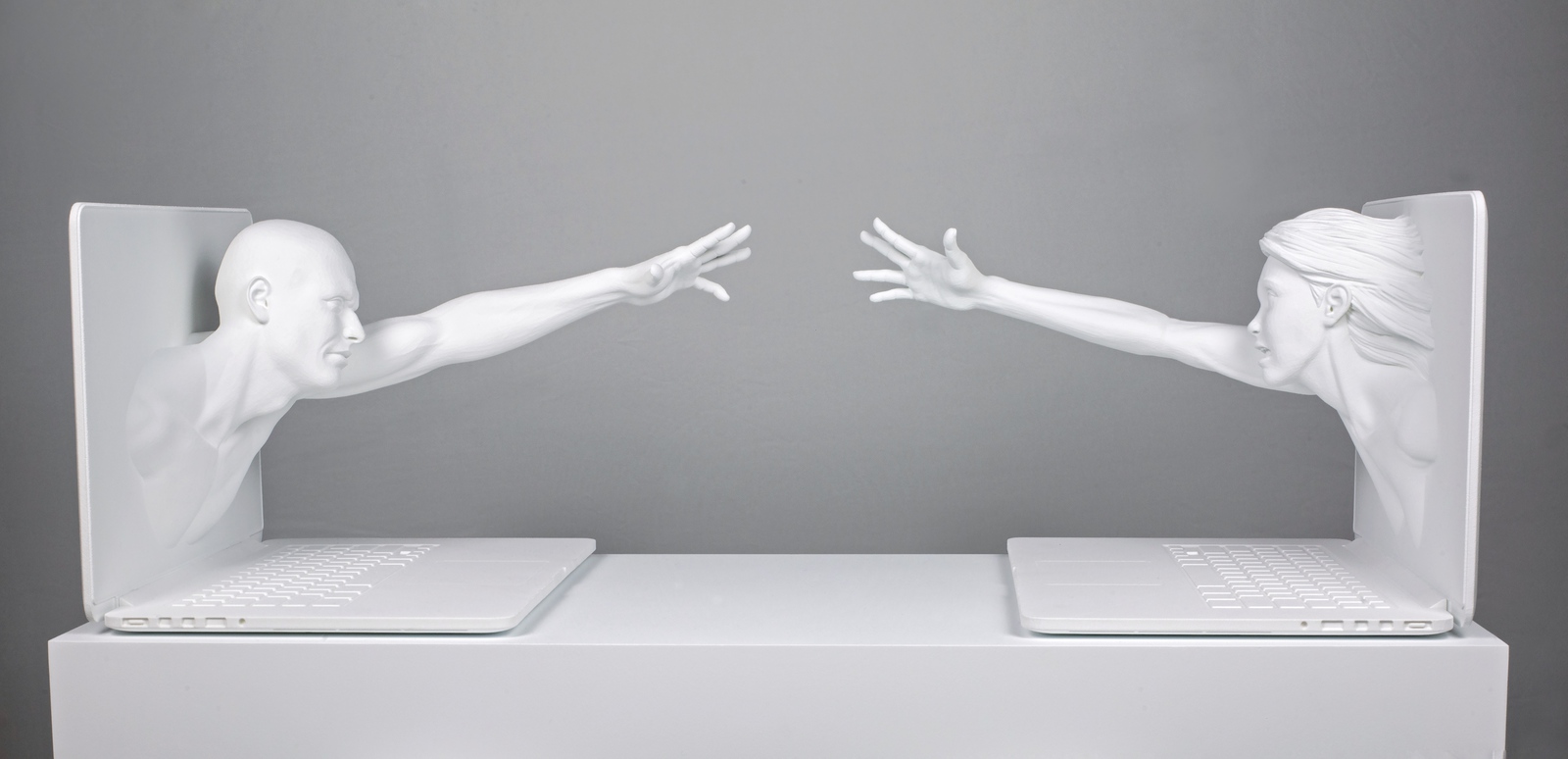
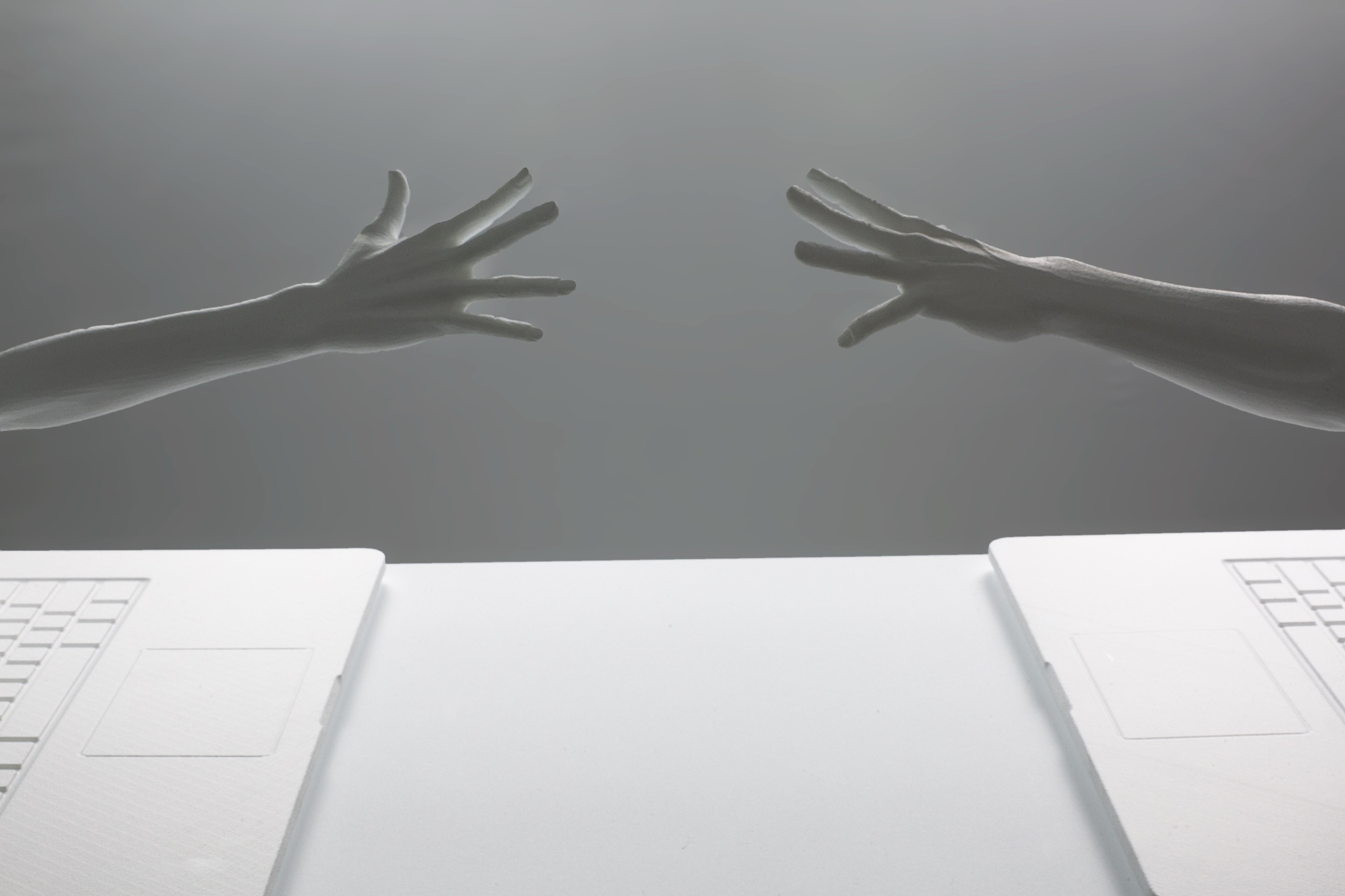
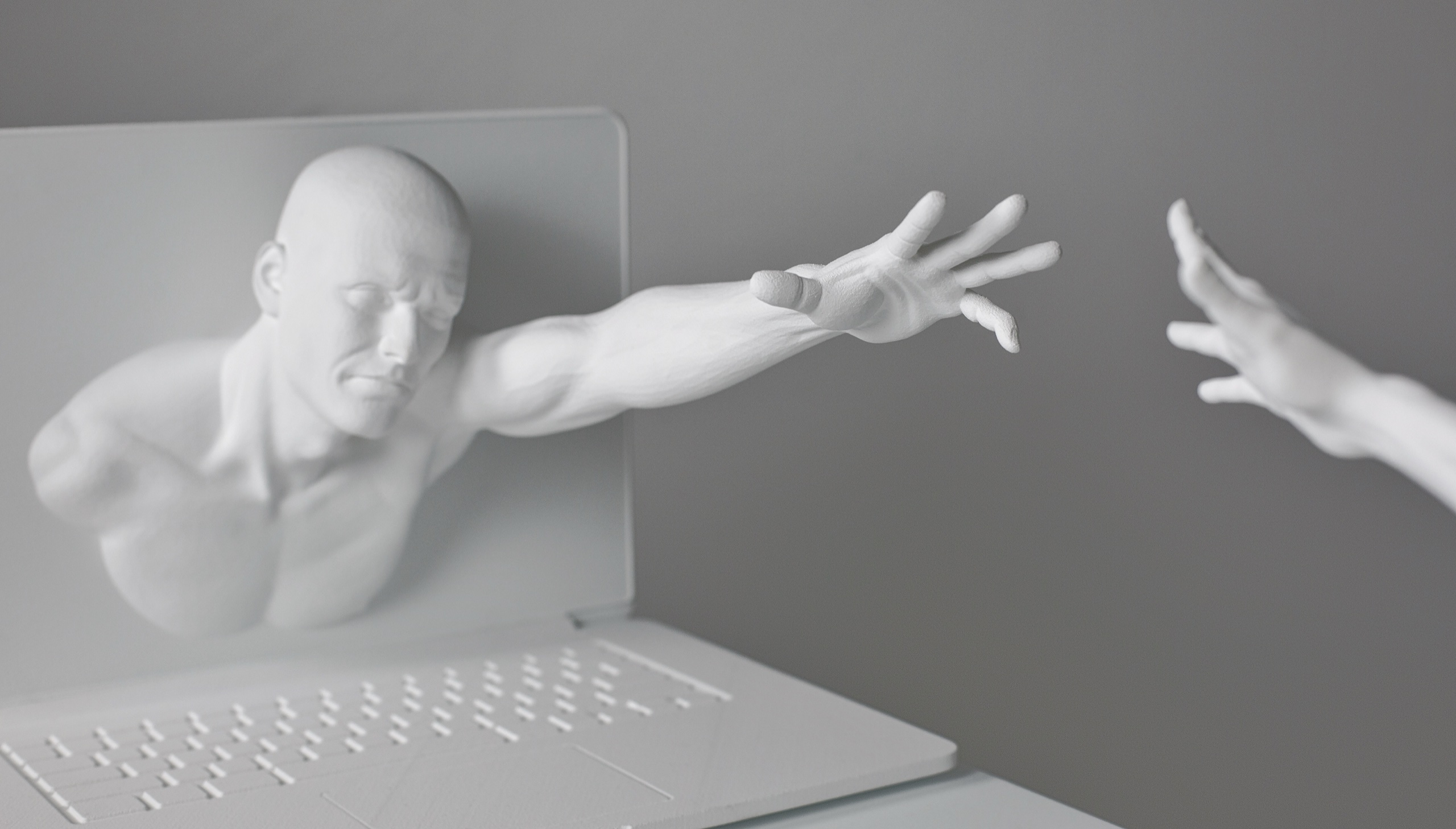
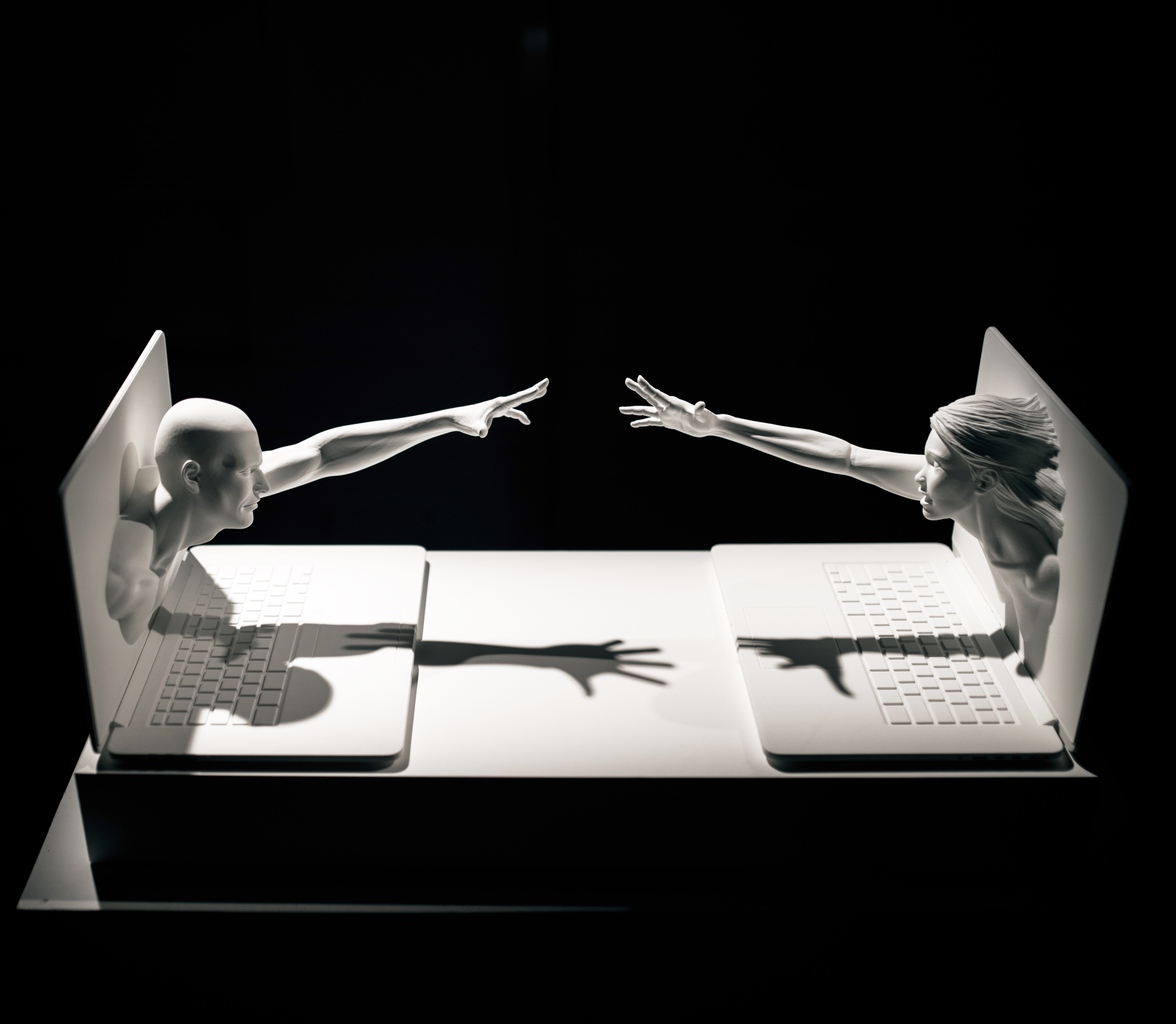
Two open laptops face each other across a narrow white plinth, and from each screen a figure breaks out in high relief: a bald man on the left, a woman with swept-back hair on the right. Each thrusts one arm forward, fingers spread, and the hands stop a short distance apart. The gap inevitably recalls Michelangelo's Creation of Adam, where the space between two fingers holds the entire drama; here the spark has become a missing connection. Cast entirely in matte white resin, devices and bodies are one substance, the shoulders still embedded in the screens like figures half-released from a block of marble. Under raking light the shadows of the arms stretch across the table, travelling further than the hands themselves can.
Long-distance relationships, remote work, video calls with family across continents: a large share of contemporary intimacy now passes through laptops, and the sculpture gives that condition a body. The two figures press as far out of their screens as the medium allows, which is not far enough. Their effort is symmetrical, and that matters; neither is indifferent, both are trying. The work thus avoids the easy accusation that technology makes people cold. It shows instead a structural limit: networks carry voices and faces with extraordinary efficiency but stop at the threshold of touch. Read this way, it portrays a society that has optimised communication and, in the process, turned the physical presence of others into a scarce good.
Touch and scream are paired in the title, and the man's face supplies the second word: eyes narrowed, teeth clenched, his whole shoulder driving forward in a strain that borders on pain. The woman's expression is more controlled, intent and focused, her hair streaming back as though she were pushing against wind. Both are caught at the moment of greatest longing, when the other is visible and almost reachable. That state is familiar to anyone who has said goodbye on a video call or watched someone they love through glass. The few centimetres between the hands become the emotional centre of the piece; viewers instinctively measure them, and often feel the urge to close the gap themselves.
Anyone who has spent months talking to loved ones through a laptop will recognise this scene at once. Two white computers face each other on a table; from each screen a person lunges forward, arm at full stretch, and their fingertips stop just short of meeting. The man's face is contorted with effort. The woman's hair flies back. Touch Scream condenses into one compact resin sculpture a feeling that video calls have made almost universal: the frustration of seeing someone perfectly and being unable to reach them. With haptic gloves and remote-touch devices now pitched as the next frontier of communication, the piece reads less like a lament than like a brief for the engineers.