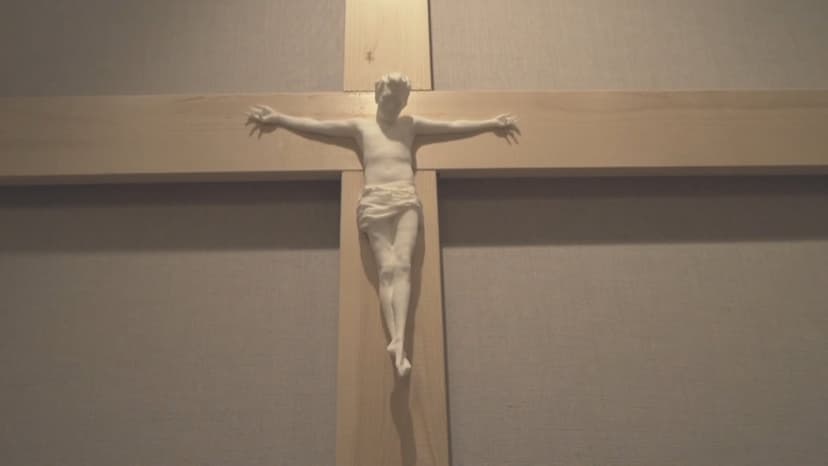
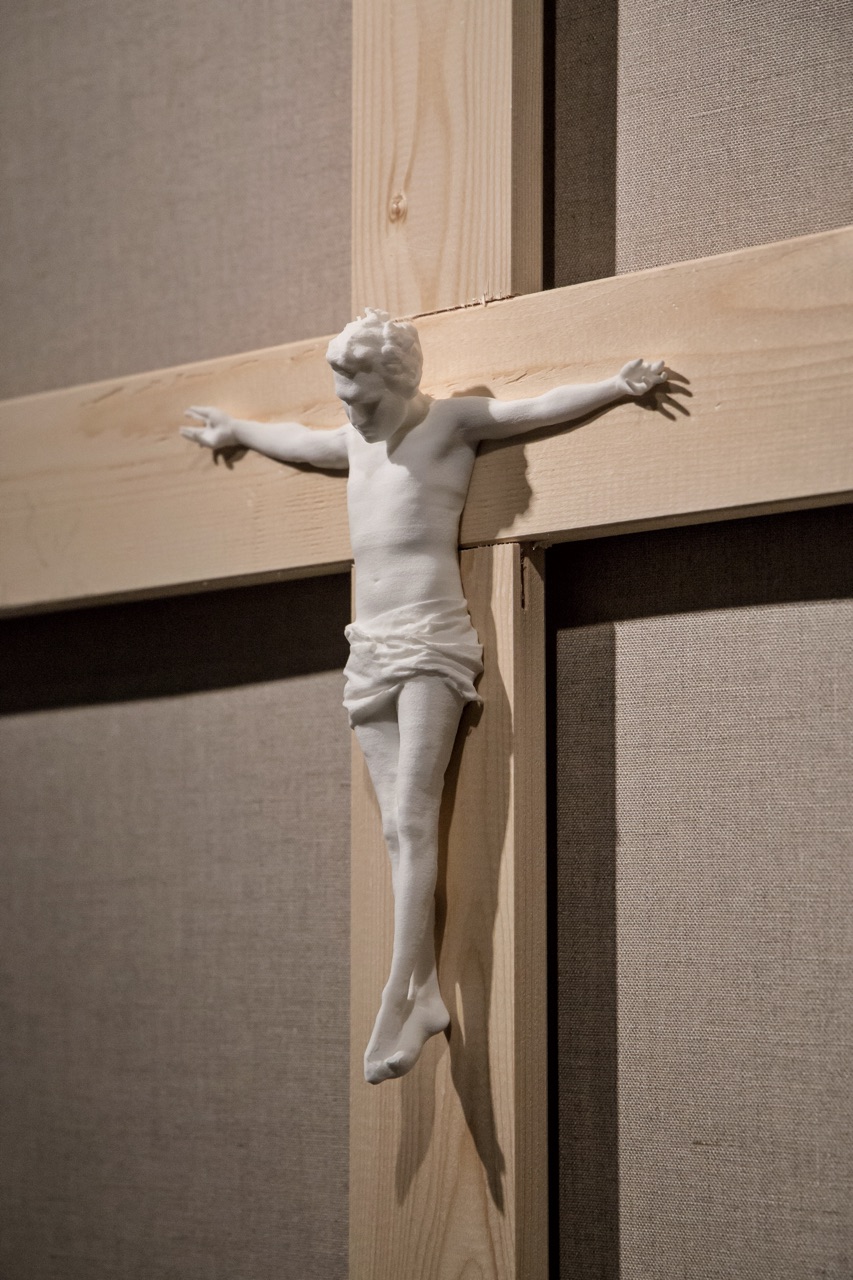
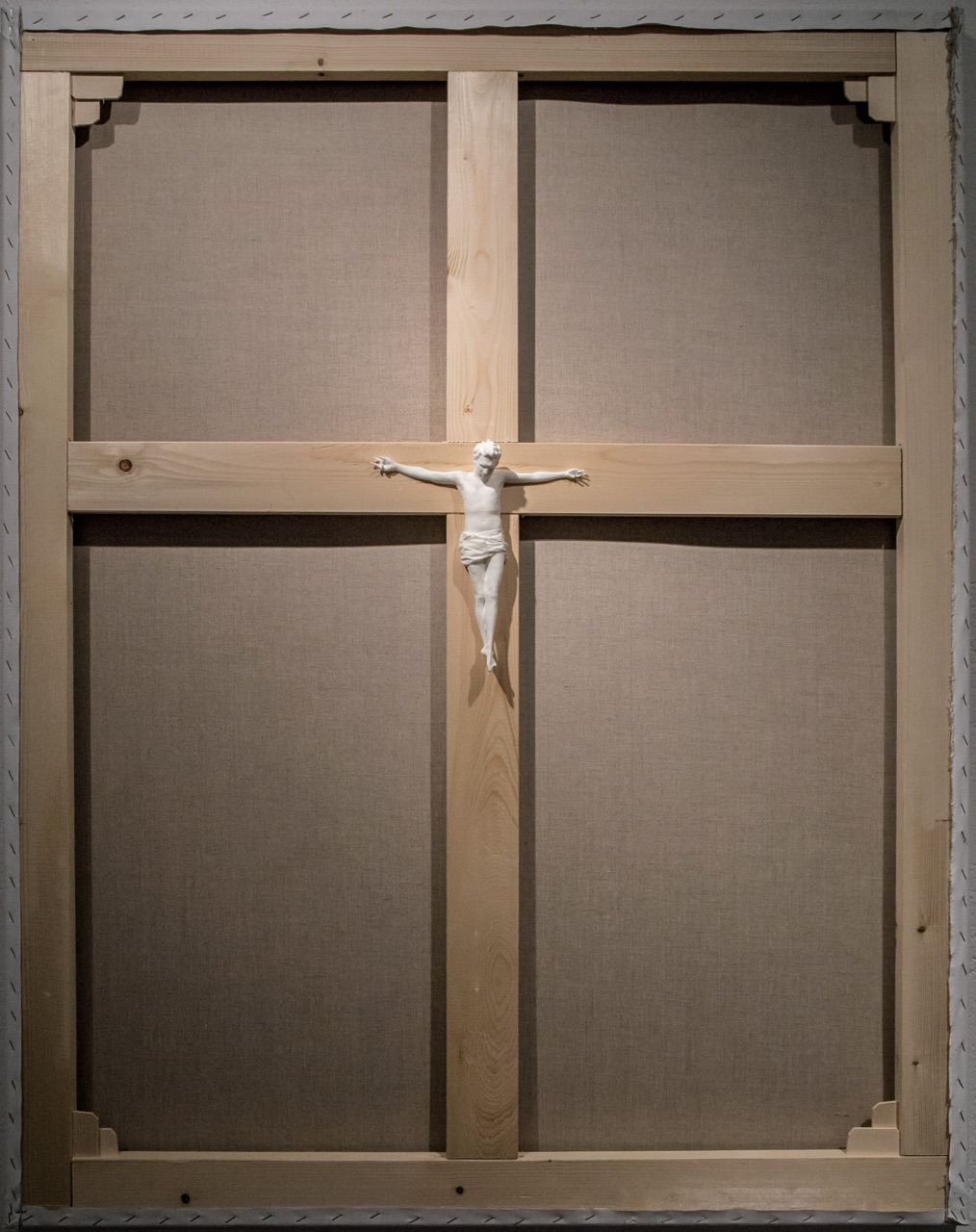
The canvas is shown from behind. Raw linen, staples along the edges, corner wedges and the pale wooden stretcher are exposed, and the central crossbars, by simple coincidence of construction, form a Latin cross. On it hangs a white figure of Christ in nylon powder, arms open, loincloth knotted, head inclined, modelled with the restraint of a devotional crucifix. The work belongs to a long tradition of paintings that turn their backs to the viewer and show the support as subject, yet it adds a further layer: the structure that holds every image becomes the image of sacrifice. The neutral palette of linen and pine, lit from the side, gives the piece the quiet austerity of a chapel wall.
The cross has been one of the most reproduced images in European history, and the work locates it inside the very tool of image-making. In doing so it touches the shifting place of religion in secular societies, where Christian symbols survive as cultural infrastructure even for those who no longer believe. The title also points to a social figure: the artist as martyr, a role celebrated by Romantic biographies and still present in the myth of the creator who suffers for the work. That myth sits uneasily beside a contemporary art system of markets, visibility and production schedules. Here the sacrifice is quietly located behind the canvas, in the part of the work the public never usually sees.
Turning a painting to face the wall is often a gesture of withholding, of something not ready or not bearable to show. Here the hidden side is offered instead, and what appears is suffering held by a scaffold. One can read the figure as a portrait of the creative self: stretched across the frame of one's own practice, exposed and vulnerable, sustained by the very structure that also immobilises it. The open arms are ambivalent, an embrace and a surrender at once. For a viewer, the work may stir recognition of the private costs behind any public image, the effort, doubt and exhaustion that remain backstage while only the front, finished and composed, is meant to be seen.
Every painting hides a cross, if you only flip it over. That is the simple, startling discovery at the heart of The Crucifixion Artist: the wooden stretcher behind a large canvas, nailed and stapled like any other, becomes the cross on which a small white Christ is hung. The effect is immediate, at once devout and slightly irreverent, and it opens a conversation that feels current in an age of burnout and constant self-exposure. Creators of every kind, from painters to influencers, are expected to give everything to their output in public. Here the price is shown on the reverse, where no one usually looks. The piece makes the back of a painting the place of revelation.