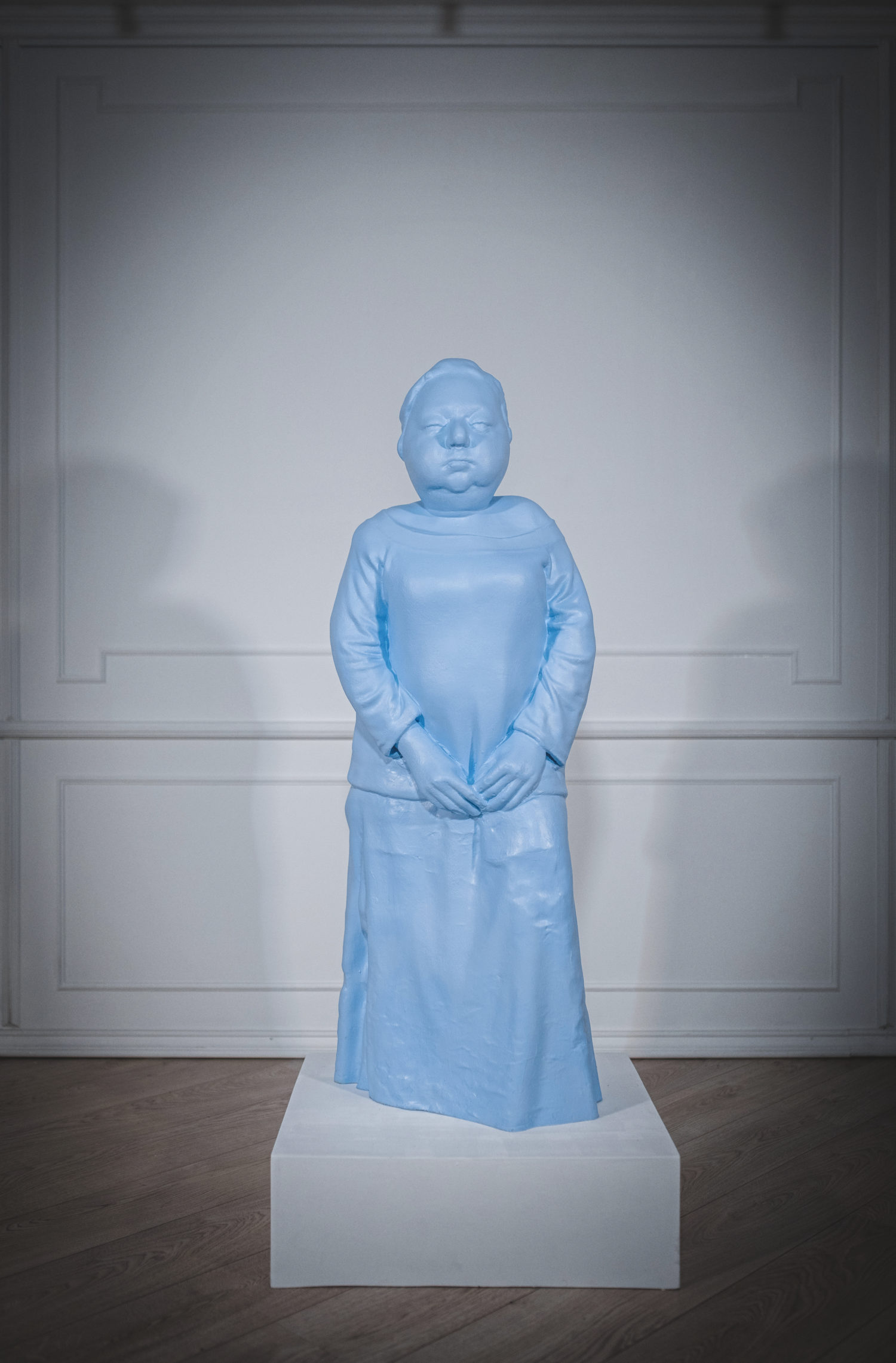
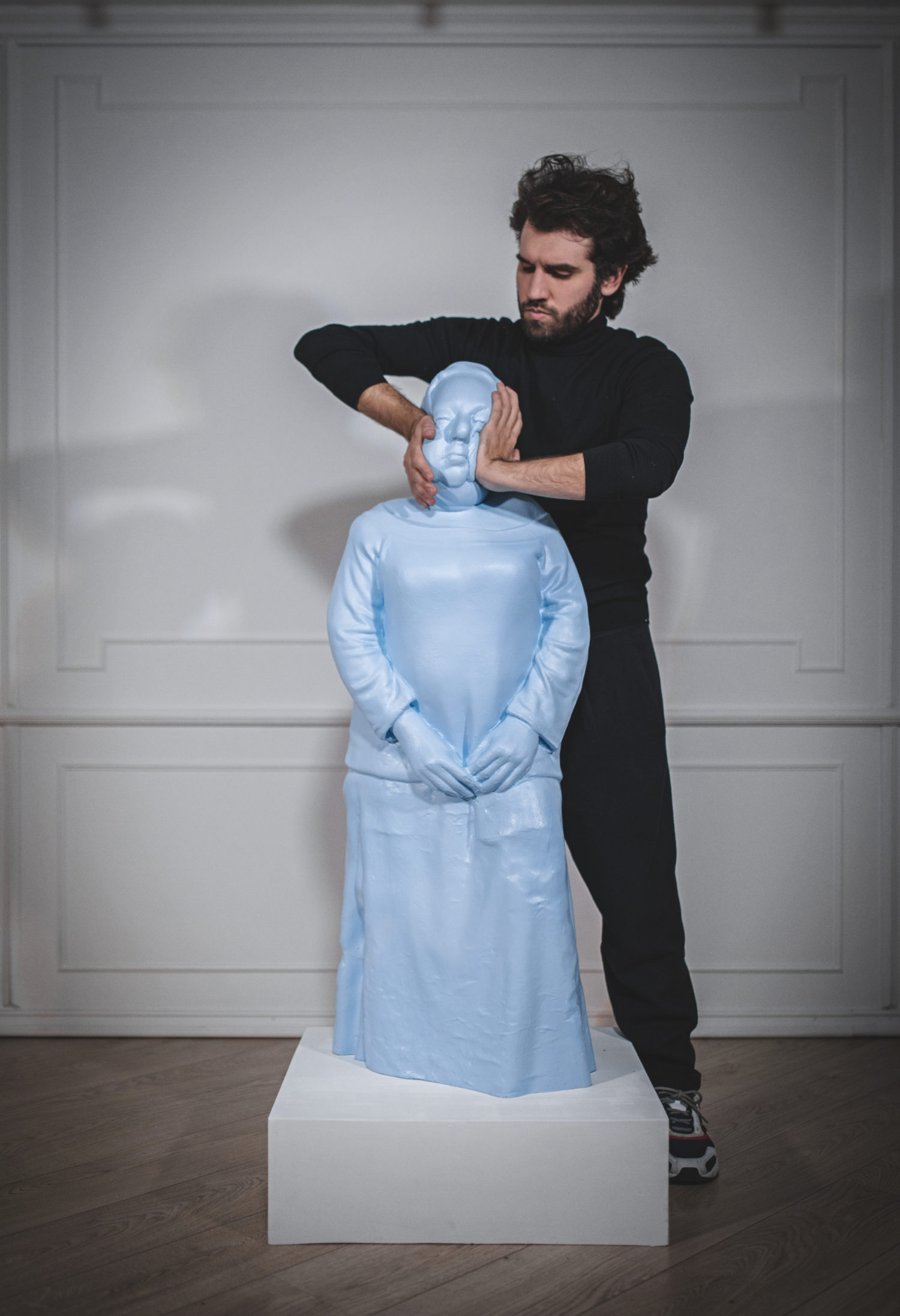
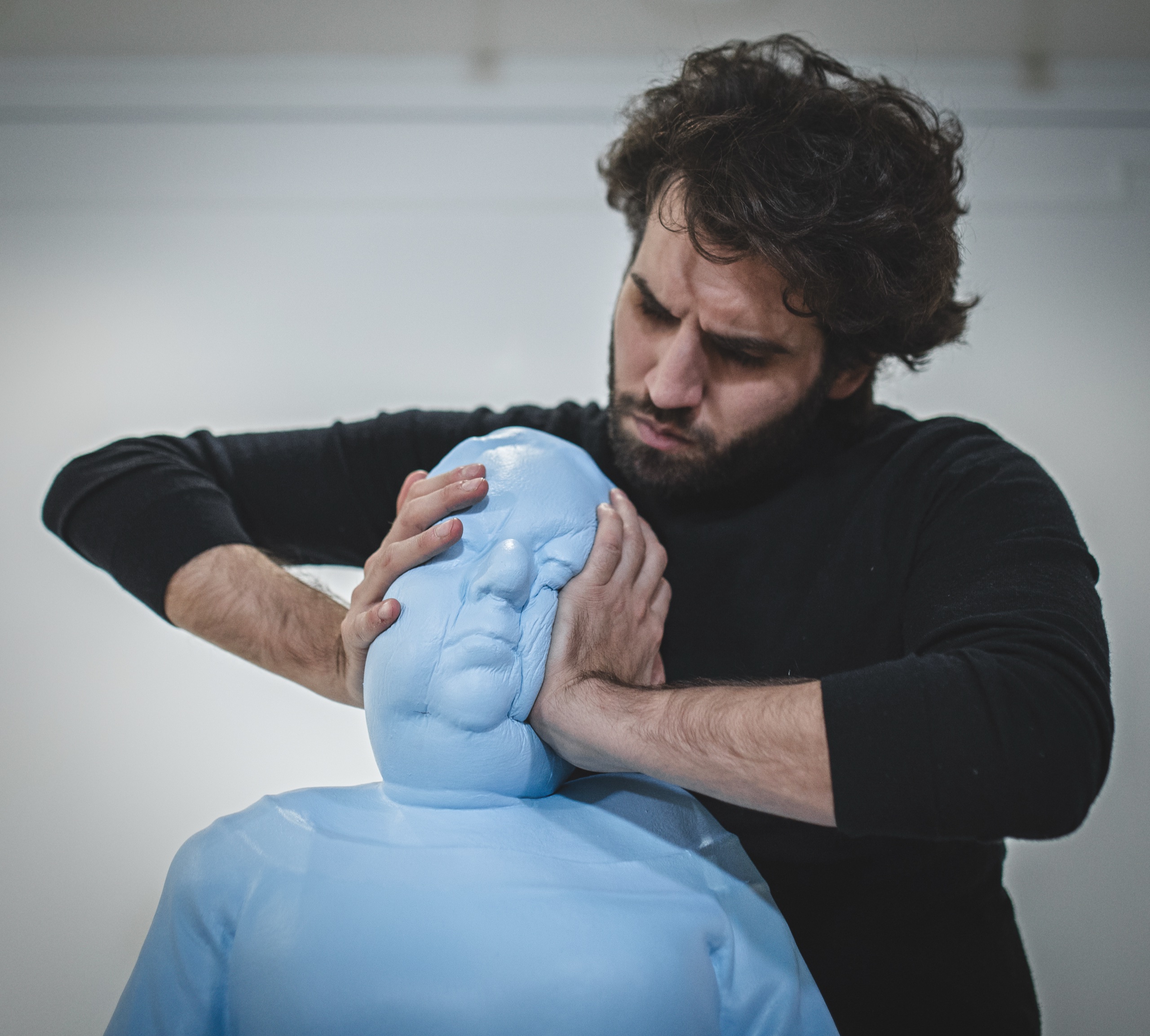
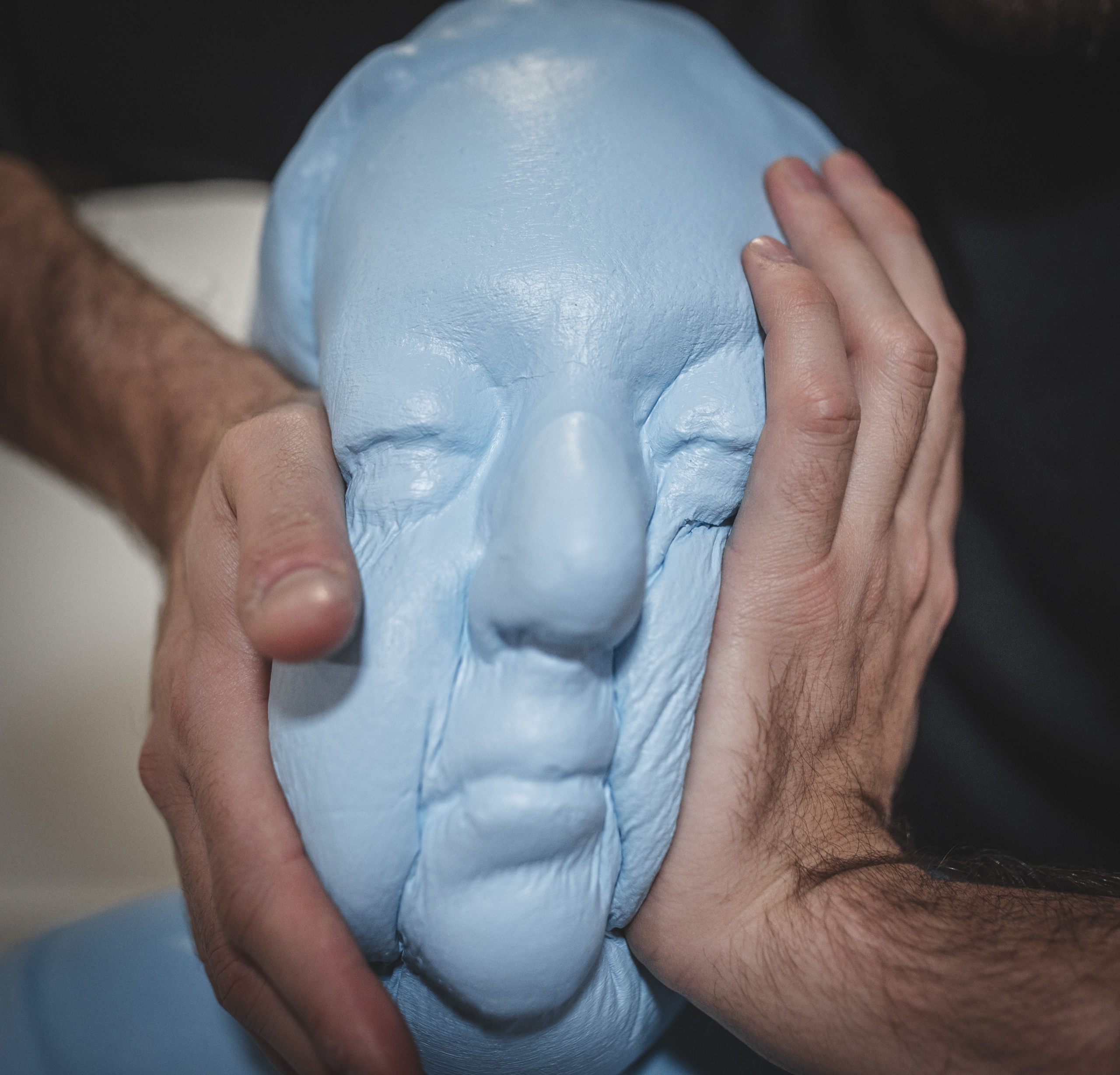
Pale blue from crown to hem, the figure stands frontally on a white plinth, hands folded low over a long skirt-like garment, chin lifted, eyes half closed. Its stiffness recalls the official portrait statue, the kind of upright, hieratic likeness erected to fix a person in public memory. The caption reveals the twist: the sculpture is made of elastic polymers, and the images show the artist himself, dressed in black, taking the head between his palms and pressing until nose, lips and cheeks fold into soft creases. Monument and toy coincide, and the maker is the first to violate his own monument. The uniform colour removes skin, fabric and hair as distinctions and turns the body into a single malleable surface, so that the act of deformation, rather than the likeness, becomes the true subject of the piece.
Every culture keeps a list of bodies that may not be touched: the sovereign, the sacred image, the elder whose dignity is protected by distance. The figure's posture belongs to that order, solemn and closed, a statue made to be looked up to. Yet the material invites exactly the contact that the pose forbids, and the hands pressing the face reveal how fragile such prohibitions are once the aura is replaced by squeezable matter. One can read here the fate of authority in a culture of memes and caricature, where any face can be stretched, distorted and passed around. The prohibition named in the title is broken not by violence but by a gesture somewhere between a game and an assault.
Watching the hands at work produces a double reaction. The face gives way so easily, with folds like those of a sleeping child or of very old skin, that the gesture looks almost tender, as when an adult squeezes a toddler's cheeks. At the same time the artist's frown and the force in his forearms suggest something closer to anger or the wish to dominate, as if whoever shaped the face also claimed the right to undo it. That ambivalence is the emotional centre of the sculpture. A forbidden contact releases pleasure and discomfort together, and the viewer, who would never touch a stranger's face, experiences by proxy the transgression and the small shame that comes with it. The closed eyes of the figure leave it without a gaze of its own: it cannot look back or protest.
It looks like the kind of statue that stands in a town square, stiff, buttoned up, hands clasped and expression grave. Then someone grabs its head and squeezes, and the face collapses into rubbery folds like a stress ball. That someone is Federico Clapis himself: he built the figure from elastic polymers, painted a single powder blue, and the photographs of him kneading its cheeks are as funny as they are unsettling. The timing feels right in an age that topples monuments and reduces leaders to filters and stickers. Taboo asks nothing about who the figure might be. It shows instead how quickly reverence turns into handling once an image becomes soft enough to grab.