Touch Scream at Triennale Milano
Triennale Milano museum, during the Festival dell’amore
Milan, Italy
Triennale Milano, the design and art museum in the Palazzo dell'Arte at the edge of Parco Sempione, hosted the Festival dell'Amore, a weekend programme of talks, music, readings, screenings and participatory events devoted to relationships and feelings. The festival was curated by Mario Viscardi of Piano B together with Manuela Mantegazza and Franco Bolelli, with installations, performances and design projects spread through the building.
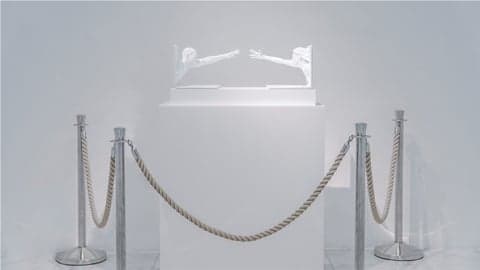
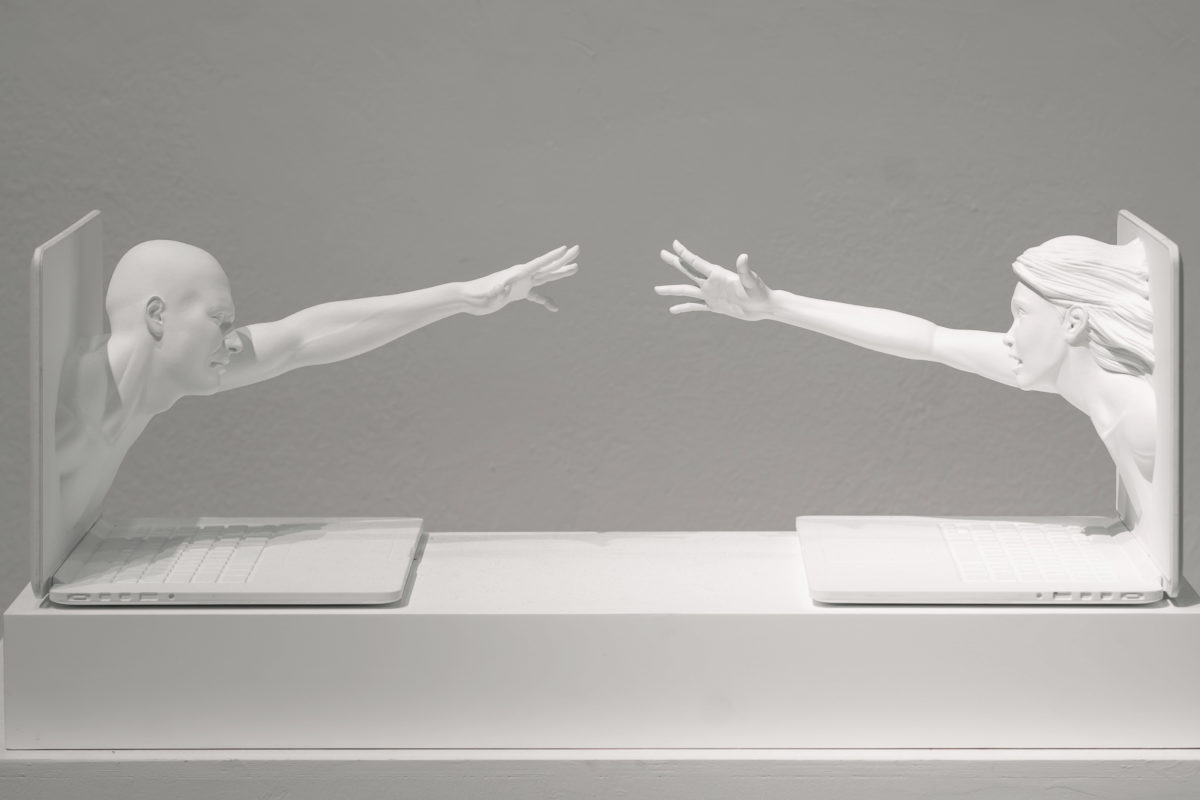
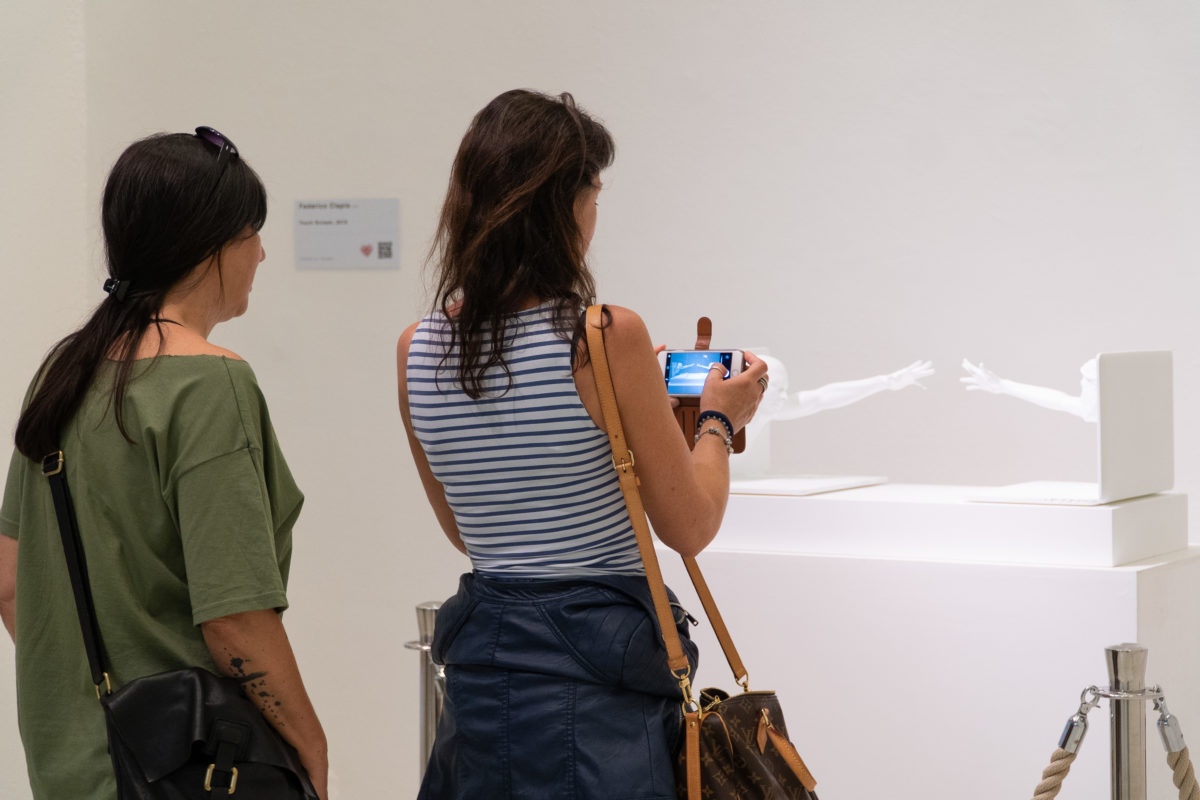
Within this programme Federico Clapis brought Touch Scream, his sculpture about touch in the age of screens: two white figures, a man and a woman, lean out of two open laptops and stretch their arms towards each other without ever closing the gap. The images show the piece on a white plinth in a bright gallery with marble floors, set behind rope barriers, with a wall label naming the artist. The festival schedule also listed a session titled after the work, "Touch Scream: the quality of contacts and feelings", in which Clapis interviewed the writer Franco Bolelli.
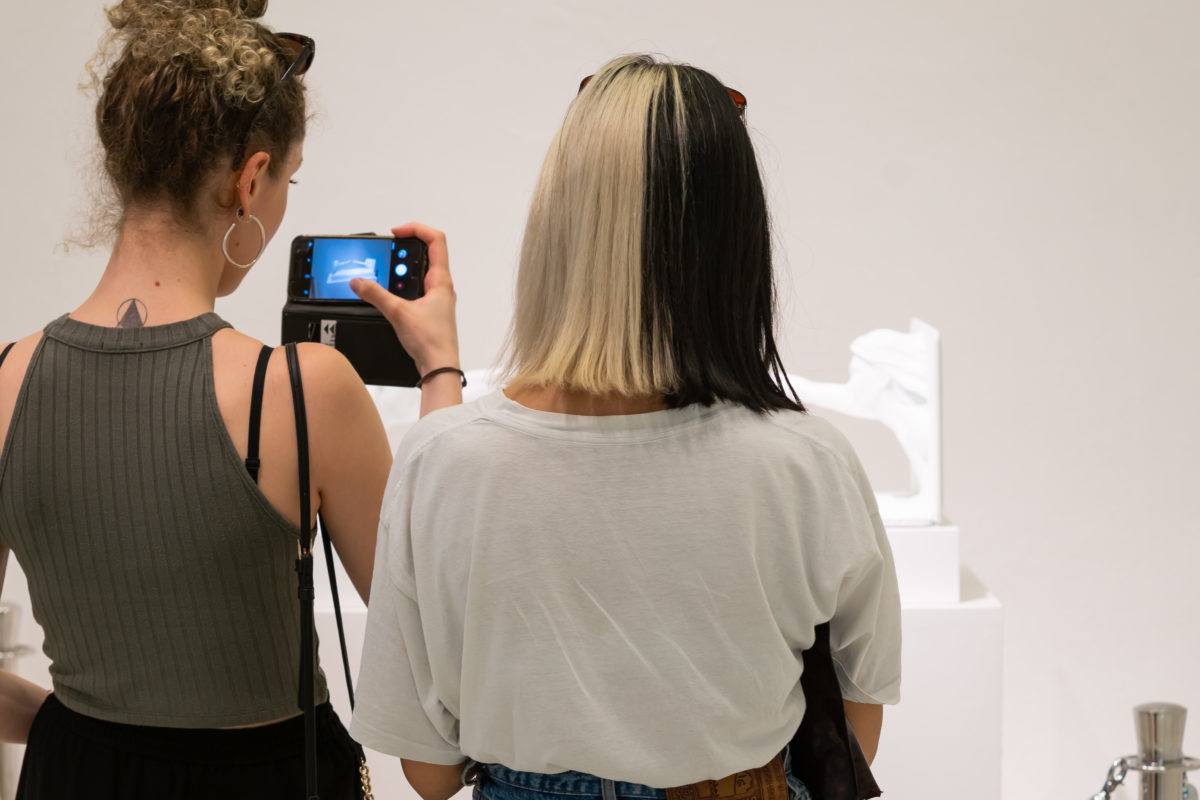
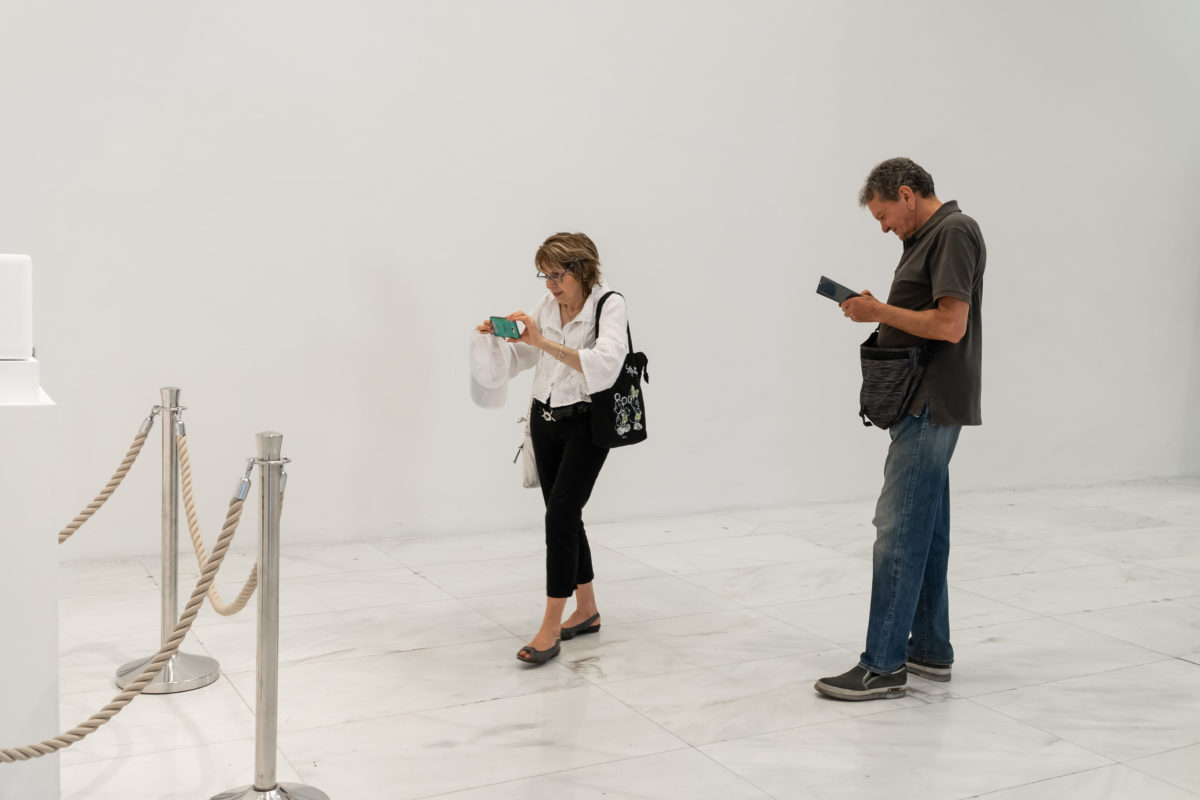
The photographs show visitors stopping in front of the sculpture and filming or photographing it with their phones, an ordinary gesture that ends up mirroring the subject of the work. Presented in a festival about love rather than in a technology context, Touch Scream reads here as a reflection on intimacy and distance, a theme Clapis has returned to throughout his work on the relationship between people and devices.