Urban installation in City of God
Babydrone mural in the Cidade de Deus favela
Rio de Janeiro, Brazil
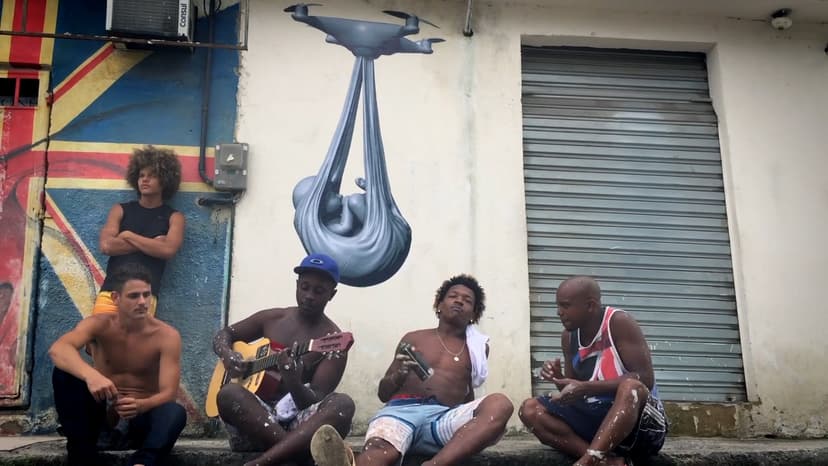
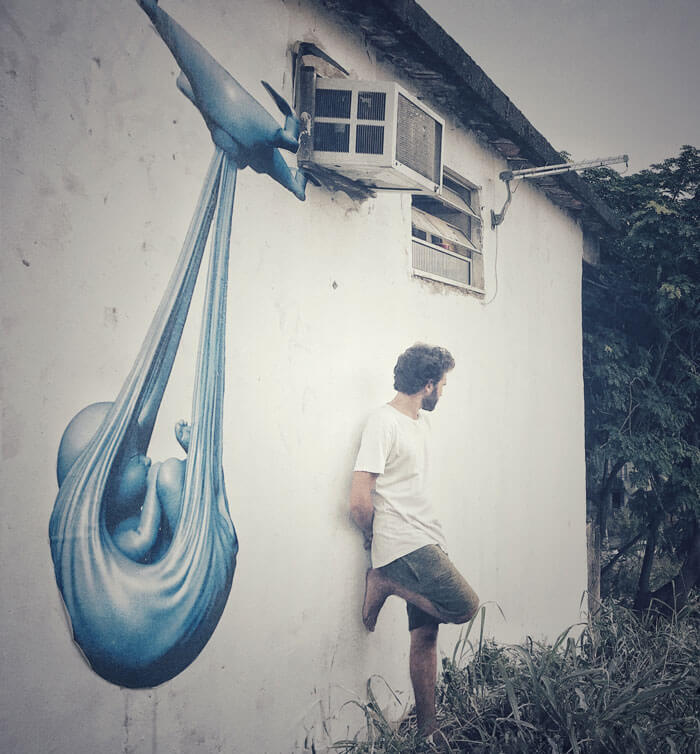
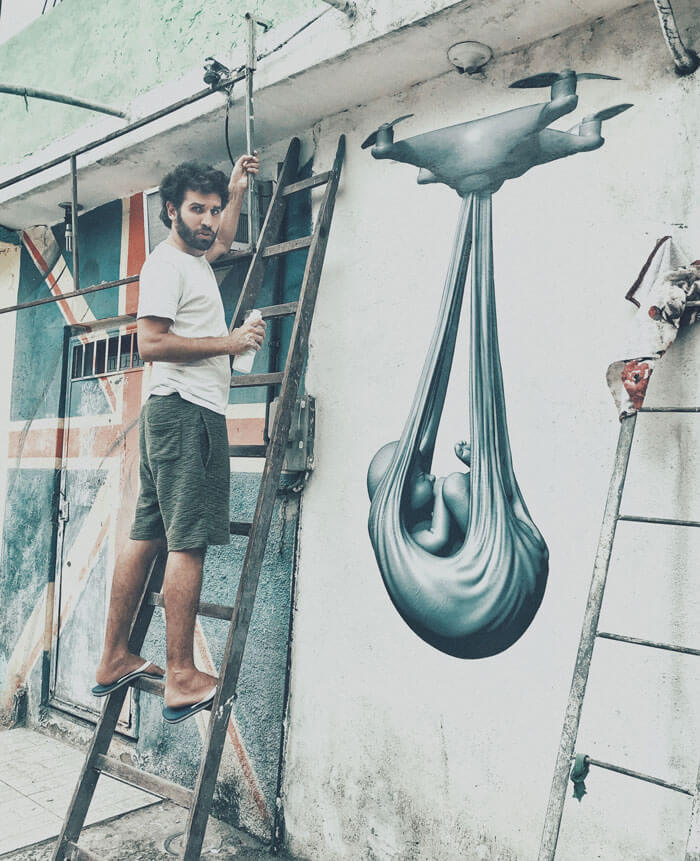
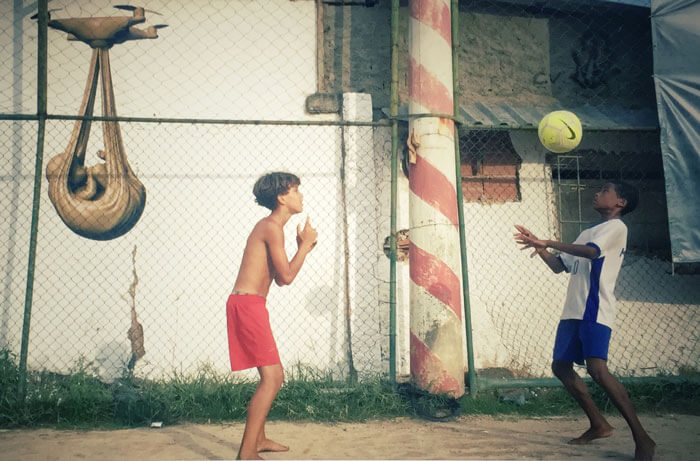
In Cidade de Deus, the Rio de Janeiro neighbourhood known worldwide as City of God, Federico Clapis brought one of his best-known images out of the gallery and onto the street. The project, documented by the artist in a short video titled City of God, consists of several murals of Babydrone, the work in which a drone takes the place of the stork and carries a newborn wrapped in a cloth sling. The photographs show the image painted at life size on the whitewashed walls of houses and small buildings in the favela, next to shop shutters, air-conditioning units and older graffiti.
The pictures suggest that the murals were made directly on site: Clapis is seen standing on a wooden ladder with a spray can beside a freshly painted drone, and leaning against a wall under a blue version of the same figure. Each wall carries a different tone of the image, grey, blue or ochre, as if adapting to the surface that hosts it. Daily life goes on around the works: a group of young men plays guitar and sings beneath one mural, and two boys play football in front of another, behind a chain-link fence.
Babydrone was born as a sculpture about a generation for whom technology is part of life from the very beginning. Placing it in a community far from the usual art circuit turns that question into a public one, addressed to the residents who pass by every day. The intervention also belongs to the line of works that Clapis has long taken into open urban space, and the same figure later reappeared in his crypto art.
Sources
- CITY OF GOD — Vimeo (Federico Clapis)